

10 Essential Commercial Laundry Machines Every Laundry Business Needs
From machine selection and capacity planning to complete commercial laundry setup, Orgaearth helps businesses build efficient and scalable laundry operations across India.
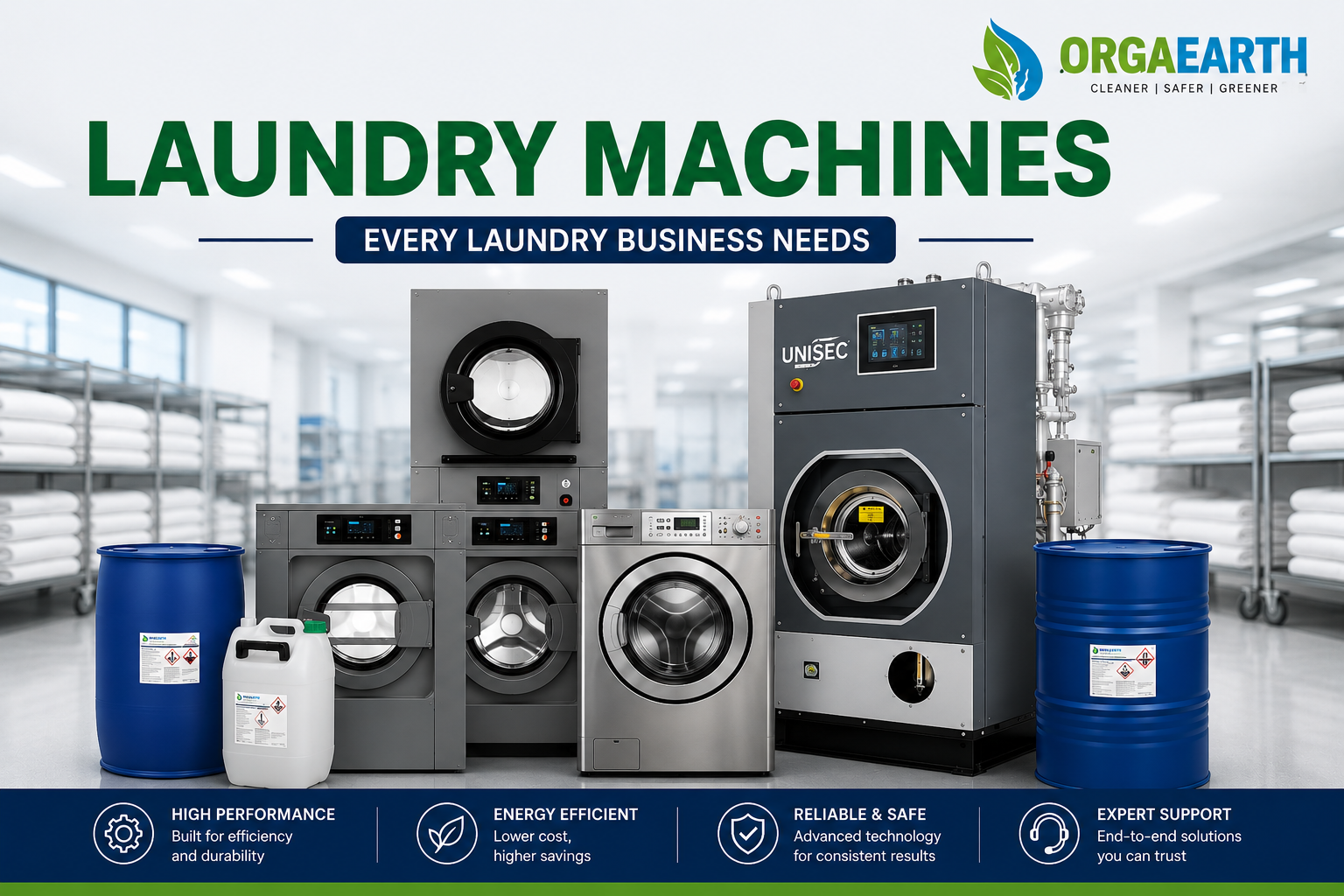
Whether you’re planning a hotel laundry, healthcare laundry, laundromat, or industrial laundry facility, selecting the right equipment is one of the most important decisions you’ll make. A well-designed laundry setup improves productivity, reduces operating costs, ensures consistent wash quality, and helps businesses handle growing laundry volumes efficiently.
Modern commercial laundries rely on more than just washing machines and dryers. From finishing equipment to automation systems, every machine plays a crucial role in streamlining operations and maximizing profitability.
In this guide, we’ll explore the 10 essential commercial laundry machines required for a successful laundry setup and explain how each contributes to operational efficiency.
Why Choosing the Right Laundry Equipment Matters
Investing in the right commercial laundry equipment directly impacts the performance of your business. High-quality machines can process larger loads, consume less water and energy, reduce labor costs, and extend the lifespan of textiles.
The right equipment also helps businesses:
- Increase daily processing capacity
- Improve turnaround times
- Lower utility expenses
- Maintain consistent wash quality
- Enhance customer satisfaction
- Achieve long-term operational efficiency
Whether you’re setting up a new laundry facility or upgrading an existing one, understanding the purpose of each machine is essential. With expert guidance from Orgaearth, businesses can select the right combination of laundry equipment to create a scalable, efficient, and future-ready laundry operation.
1. Commercial Washer Extractors
Commercial washer extractors are the core machines of any laundry operation. These machines combine washing and high-speed extraction in a single unit, removing a significant amount of moisture before garments move to the drying stage.
Modern industrial washer extractors are designed to handle large volumes while maintaining excellent cleaning performance and fabric care.
Benefits of Commercial Washer Extractors
- Typical Capacity Range 10 kg – 120 kg+
- High-capacity washing
- Faster processing cycles
- Reduced drying time
- Lower water consumption
- Improved energy efficiency
Businesses such as hotels, hospitals, industrial laundries, and linen rental services rely heavily on washer extractors to maintain productivity.
2. Commercial Tumble Dryers for Faster Turnaround Times
After washing, efficient drying becomes critical. Commercial tumble dryers are designed to handle heavy loads while ensuring even drying and fabric protection.
Advanced dryers feature moisture-sensing technology that automatically stops the cycle when garments reach the desired dryness level, helping reduce energy consumption.
Why Commercial Dryers Are Important
- Faster drying cycles
- Improved workflow efficiency
- Reduced labor requirements
- Lower energy costs
- Better fabric protection
- Typical Capacity Range 10 kg – 120 kg+
Choosing the correct dryer capacity ensures a balanced workflow between washing and drying operations.
3. Flatwork Ironers for Linen Finishing
Hotels, hospitals, banquet facilities, and large laundry operations process significant quantities of bed sheets, tablecloths, pillowcases, and other flat linens.
Flatwork ironers dry, press, and finish these items in a single process, delivering a professional appearance while increasing productivity.
Key Advantages
- Consistent linen quality
- Faster finishing process
- Reduced manual ironing
- Enhanced presentation standards
- Improved labor efficiency
- Typical Capacity Range: Various configurations
For hospitality businesses, professionally finished linens play a significant role in enhancing guest satisfaction.
4. Dry Cleaning Machines for Delicate Garment Care
Not all fabrics can withstand traditional washing processes. Delicate garments, formal wear, uniforms, and specialty textiles often require dry cleaning equipment.
Modern dry cleaning machines use specialized solvents to remove stains and dirt without damaging sensitive fabrics.
Typical Capacity Range 10 kg – 60 kg
Industries That Benefit
- Dry cleaning businesses
- Luxury hotels
- Uniform management services
- Garment care facilities
- Textile processing companies
Including dry cleaning capabilities expands service offerings and increases revenue opportunities.
5. Steam Press and Finishing Equipment
The final appearance of garments is just as important as cleanliness. Steam presses and finishing equipment help eliminate wrinkles and create a professional finish. These machines are commonly used for:
- Shirts
- Uniforms
- Jackets
- Trousers
- Hospitality garments
Benefits
- Improved garment presentation
- Faster finishing times
- Reduced manual labor
- Consistent finishing quality
- Typical Capacity Range: Various sizes
A dedicated finishing section helps businesses deliver premium-quality results to customers.
6. Automatic Chemical Dosing Systems
Chemical management plays a major role in laundry quality and operating costs. Manual chemical handling often leads to inconsistent results and product wastage.
Automatic dosing systems precisely dispense detergents, softeners, disinfectants, and specialty chemicals during wash cycles.
Advantages of Automated Dosing
- Consistent wash quality
- Reduced chemical consumption
- Lower operating costs
- Improved workplace safety
- Better compliance with hygiene standards
- Typical Capacity Range Scalable
Automation ensures every load receives the correct chemical formulation.
7. Laundry Folding and Sorting Equipment
As laundry volumes increase, manual folding and sorting become time-consuming and expensive.
Automated folding and sorting equipment helps streamline post-wash operations by reducing labor dependency and increasing throughput.
Key Benefits
- Faster processing
- Improved productivity
- Consistent folding quality
- Reduced workforce requirements
- Enhanced operational efficiency
- Typical Capacity Range: High-volume processing
Large-scale laundries often use folding systems to improve workflow and reduce bottlenecks.
8. Garment Conveyors and Storage Systems
Garment conveyors simplify garment handling, storage, and order management.
These systems automatically transport garments through different stages of processing, reducing manual handling and minimizing errors.
Applications
- Dry cleaning facilities
- Uniform management services
- Hospitality laundries
- Retail garment processing
Benefits
- Better organization
- Faster retrieval
- Improved inventory control
- Reduced labor costs
- Typical Capacity Range Customizable
Garment conveyors become increasingly valuable as business volume grows.
9. Water Treatment and Recovery Systems
Water is one of the largest operating expenses in a commercial laundry facility. Water treatment and recovery systems help reduce consumption while maintaining washing performance.
These systems filter, treat, and recycle water for reuse in various laundry processes.
Why Water Treatment Matters
- Lower water bills
- Reduced environmental impact
- Improved wash quality
- Extended equipment lifespan
- Enhanced sustainability
- Typical Capacity Range Plant dependent
As environmental regulations become stricter, water-saving technologies are becoming a necessity rather than an option.
10. Laundry Management and Automation Systems
Modern laundries increasingly rely on digital technologies to monitor performance and optimize operations.
Laundry management systems provide valuable insights into machine usage, utility consumption, production efficiency, and maintenance schedules.
Benefits of Laundry Automation
- Real-time monitoring
- Improved productivity
- Preventive maintenance planning
- Reduced downtime
- Better operational control
- Typical Capacity Range: Plant-wide
Smart laundry systems help businesses make data-driven decisions and improve profitability.
Recommended Laundry Equipment Based on Daily Laundry Volume
Choosing the right machine capacity is just as important as selecting the right equipment. The table below provides general recommendations based on daily laundry requirements.
| Daily Laundry Volume | Recommended Setup |
| Up to 100 kg/day | 1 Washer Extractor + 1 Tumble Dryer |
| 100–300 kg/day | 1–2 Washers + 1–2 Dryers + Steam Press |
| 300–800 kg/day | Multiple Washers & Dryers + Flatwork Ironer + Dosing System |
| 800–2,000 kg/day | Complete Laundry Plant with Automation |
| 2,000 kg+/day | Industrial Laundry Facility with Water Recovery & Conveyors |
Actual equipment requirements may vary depending on operating hours, textile types, and future expansion plans.
How to Choose the Right Laundry Equipment
Before investing in commercial laundry equipment, consider:
- Daily laundry volume
- Available installation space
- Water and power requirements
- Future business growth
- Equipment reliability
- After-sales service and support
Working with an experienced laundry equipment supplier can help ensure the right machine selection for your operation.
Final Thoughts
A successful laundry setup requires the right combination of washing, drying, finishing, chemical management, and automation equipment. Investing in the appropriate machines helps improve productivity, reduce operating costs, and maintain consistent service quality.
Whether you’re planning a new laundry facility or upgrading an existing operation, selecting equipment that matches your business requirements is key to long-term success.
Frequently Asked Questions:
What machines are required for a commercial laundry business setup?
How do I choose the right washer extractor capacity?
What is the difference between commercial and industrial laundry machines?
What is the ideal washer extractor capacity for a commercial laundry?
How many machines are required for a 500 kg per day laundry setup?
Grow Your Laundry Business with Orgaearth
Whether you are planning a small local setup or a large commercial laundry unit, investing in professional equipment and workflow solutions plays a major role in long-term success.
Orgaearth laundry solutions provides complete commercial and industrial laundry solutions for hotels, hospitals, laundromats, hostels, healthcare facilities, and institutional laundries across India. Our team helps businesses with equipment selection, capacity planning, laundry layout design, installation support, and turnkey laundry setup solutions.
Contact our experts today to discuss your requirements and find the right laundry machines for your business.
Get the Right Machine for Your Laundry Business Setup (Free Consultation)
Get expert guidance based on your exact requirement.